On 17 November 2026, the French National Assembly adopted, by 464 votes to 64, the “Resilience” bill transposing the NIS 2 Directive. For local authorities (municipalities, metropolitan authorities and inter-municipal bodies), the text confirms a NIS 2 scope far broader than the one required by Brussels, while ruling out fines in favour of a regime based on transparency and the accountability of public managers.
Caen in 2022, Albi in 2024, the Hénin-Carvin agglomeration community in January 2026: no tier of local government has been spared by cyberattacks. Each time, the continuity of public services is disrupted. In 2024, ANSSI handled 218 incidents affecting French local authorities.
That is nearly eighteen a month, including twenty-five ransomware compromises mostly affecting municipalities and inter-municipal bodies (EPCIs)1. The threat is also diversifying: while the share of local authorities among ransomware victims fell to 11% in 2025, email account compromises, denial-of-service attacks and attacks through a shared service provider have lost none of their intensity2.
Local authorities facing the cyber threat
Incidents affecting local authorities handled by ANSSI in 2024
Incidents handled
218
nearly 18 a month
Ransomware
25
mostly municipalities and EPCIs
A diversifying threat
Email account compromises: 30% of incidents handled in 2024.
Denial-of-service and attacks via a shared provider remain very active.
Source: ANSSI, Collectivités territoriales – Synthèse de la menace (2025) and Panorama de la cybermenace 2025
Where does the Resilience Act stand?
It is against this backdrop that MPs approved, on 17 November, the bill on the resilience of critical infrastructure and the strengthening of cybersecurity. It must now go before a joint committee (commission mixte paritaire), which will have to reconcile the MPs’ version, stricter towards local authorities, with that of the Senate, which had been more attentive to the constraints faced by municipalities3.
One question arises: what will this text actually change for elected officials, chief executives, IT directors and CISOs of local authorities?
The consequences of the text for businesses and for healthcare institutions have already been covered on this blog; those affecting local government call for a separate analysis, so much does the regime for local authorities differ.
Which local authorities are covered by NIS 2?
The text adopted by MPs classifies as essential entities regions, departments, municipalities with more than 30,000 inhabitants, metropolitan authorities, urban communities and agglomeration communities, as well as departmental fire and rescue services (SDIS) and local civil service management centres (CDG)3. Communities of municipalities, along with their public administrative bodies active in a critical sector, become important entities, regardless of their population. According to estimates put forward during the debates, nearly a thousand inter-municipal bodies and around three hundred municipalities would thus fall within the scope of the law.
Which local authorities are covered by NIS 2?
Municipalities, inter-municipal bodies and affiliated public bodies
Essential entity
> 30,000
inhabitants
Municipalities, as well as regions, departments, metropolitan, urban and agglomeration communities, SDIS and CDG
≈ 300 municipalities covered
Important entity
No
population threshold
All communities of municipalities and their public bodies active in a critical sector
≈ 1,000 inter-municipal bodies in scope
Not directly covered
< 30,000
inhabitants
Non-designated municipalities; syndicates, CCAS and CIAS under their sector thresholds
Covered through their inter-municipal body
Source: Resilience bill, text adopted by the French National Assembly on 17 November 2026
A broader scope than the Senate wanted
The Senate, following the Association of Mayors of France (AMF), had sought to spare agglomeration communities with no municipality of more than 30,000 inhabitants; this distinction was removed. In the chamber, amendments seeking to reserve important-entity status for the 210 or so communities of municipalities with more than 30,000 inhabitants, or, as a fallback, for those with more than 20,000 inhabitants, were withdrawn after unfavourable opinions from both the committee and the government. The 30,000-inhabitant threshold applicable to municipalities was kept unchanged4.
Are municipalities with fewer than 30,000 inhabitants spared?
Does this mean that municipalities with fewer than 30,000 inhabitants escape all requirements? Certainly not. Most of them will be affected through their inter-municipal body, which often provides their email, hosting or business applications; indeed, it is this pooling role that, in the government’s view, justified bringing all communities of municipalities within scope. The smallest structures may also be designated on a case-by-case basis when they provide a critical service. As for syndicates, CCAS and CIAS (municipal and inter-municipal social action centres), they are not classified as such: the social and medico-social establishments they run fall under the thresholds specific to that sector, and water, sanitation or waste syndicates under the criteria applicable to their activity.
NIS 2: what MPs changed for local authorities
Beyond scope alone, several amendments adopted in the chamber directly affect local management:
- Incident notification: local authorities within scope will have to alert ANSSI within twenty-four hours, issue an initial report within seventy-two hours, then submit a final report within one month. A single declaration, led by ANSSI, will also count as notification to the CNIL4. In the event of a data leak, the individuals concerned will have to be informed of the risks, the right reflexes and available remedies, notably through Cybermalveillance.gouv.fr, which is particularly important when civil registry or social welfare data are exposed.
- Sovereignty of digital solutions: MPs required essential entities to use solutions not subject to foreign laws and introduced a preference for providers qualified by ANSSI and taxed in France. For local authorities, whose email, office software and financial management tools often come from large non-European vendors, these provisions could have considerable consequences. The recent global Microsoft outage was a reminder of the limits of relying on a single provider. These provisions are still provisional: their compatibility with EU law remains disputed, and they could be rewritten.
Cyber risk built into local management
- Greater consideration of cyber risk in existing local management tools: all municipalities, and no longer only those with more than 30,000 inhabitants, will have to include it in their municipal safeguard plan (PCS), and every employer, public or private, in its single occupational risk assessment document (DUERP)5. In other words, even the smallest municipalities, outside the scope of NIS 2, can no longer ignore the issue.
4 NIS 2 changes voted for local authorities
01
Incident notification
Alert within 24 h, initial report within 72 h, final report within 1 month
02
Informing victims
Risks, right reflexes and remedies explained to those affected
03
Digital sovereignty
Solutions not subject to foreign laws, qualified providers
04
Local management
Cyber risk included in every municipality’s PCS and in the DUERP
Source: Resilience bill, text adopted by the French National Assembly on 17 November 2026
NIS 2: what security measures for local authorities?
The bill requires the local authorities concerned to take technical, operational and organisational measures proportionate to their exposure to risk. While the detailed requirements will be set by decree and by the ReCyF, they are already structured around the four pillars identified in our recent article on healthcare institutions6:
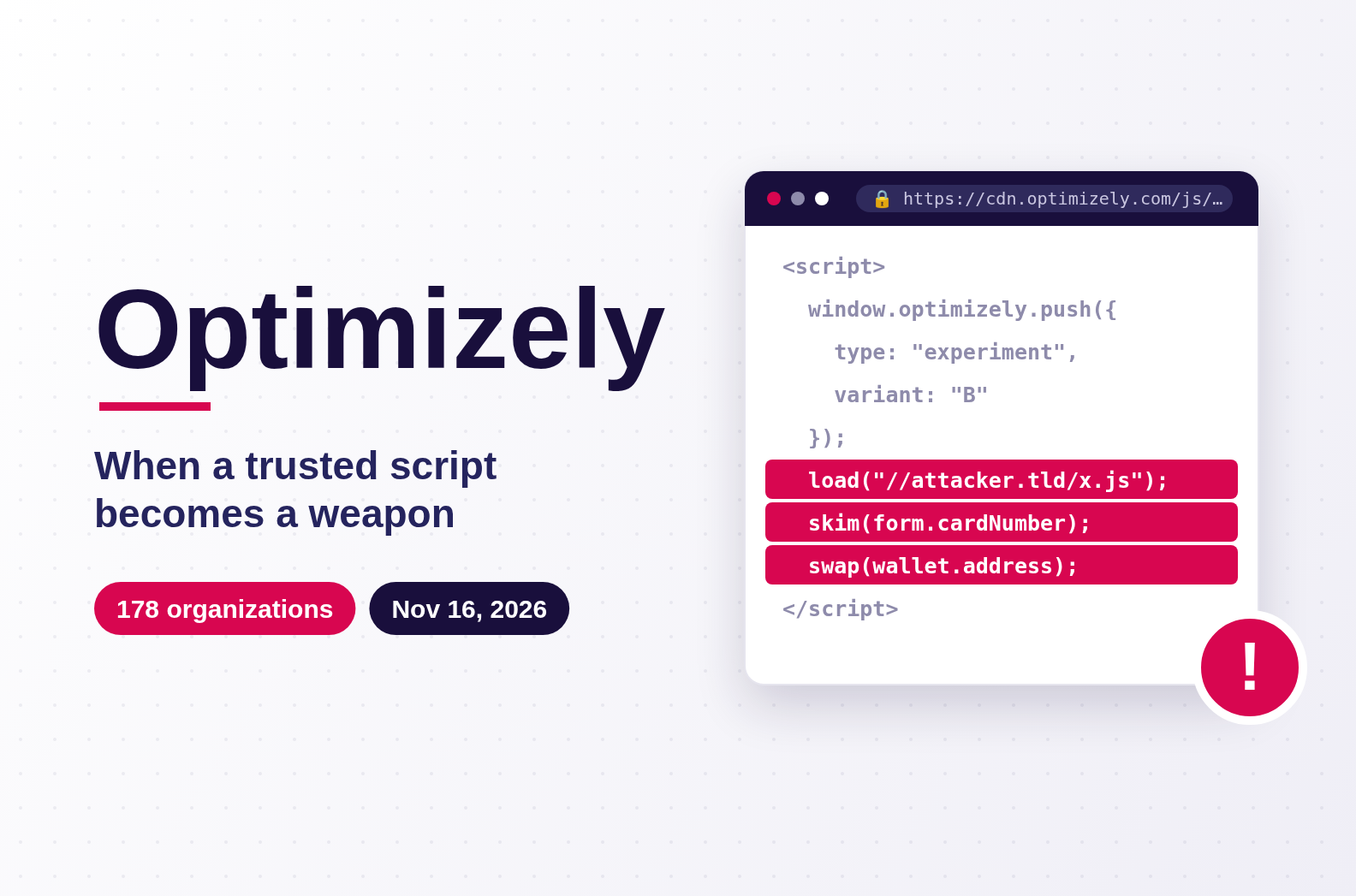
- Management of risks to the information system, including the supply chain. The Optimizely attack, which hit 178 organisations through a trusted script, shows how exposed this last link is.
- Security of networks and information systems by enforcing strict access control, MFA, etc. Email account compromises, which accounted for 30% of incidents handled by ANSSI in 2024, make identity management a priority1.
- An incident management plan that must necessarily provide for degraded-mode operation, or even a return to paper, for essential services to the population.
- Monitoring and reporting for continuous supervision of the information system.
Stronger requirements for essential entities
Essential entities will have to go further: regular penetration tests and audits, business continuity and recovery plans backed by isolated and tested backups, and the appointment of a cybersecurity officer.
For an inter-municipal body hosting the systems of its member municipalities, these requirements take on particular significance, as a compromise can spread to all connected entities.
NIS 2: what controls and penalties for local authorities?
Cybersecurity is no longer the sole concern of IT departments. The governing bodies of local authorities will have to approve risk management measures, oversee their implementation and undergo specific training. ANSSI will have inspection, audit and injunction powers over them.
No fines, but a transparency regime
Local authorities are exempt from administrative fines. The government justified this choice by the way local authorities are funded, since a fine would ultimately be paid by their residents. MPs therefore rejected the amendment by the chair of the special committee that sought to subject them to fines of the same amount after an ineffective remediation plan. Instead, in Article 37, they opted for a mechanism based on transparency: in the event of a breach, the local authority has three months to draw up a remediation plan with ANSSI’s support; failing that, the sanctions committee may order it to put this plan on the agenda of the next meeting of its deliberative assembly and make it public7. ANSSI may also publish its enforcement measures.
NIS 2: the procedure for local authorities in case of breach
A regime based on transparency rather than fines
T0
Breach
Identified by ANSSI during an inspection
3 months
Remediation plan
Drawn up with ANSSI’s support
Agenda
Council meeting
Placed before the deliberative assembly upon injunction
Public
Publicity
Plan made public to residents
Accountability
No administrative fines — but financial courts will be able to penalise public managers responsible for serious breaches
Source: French National Assembly, sitting of 10 November 2026, Art. 37 and after Art. 37 bis
Public managers’ liability at stake
Does this mean a breach has no consequences? Certainly not, since two amendments adopted after Article 37 bis, against the government’s opinion, allow financial courts to penalise public managers responsible for serious breaches7. It remains to be seen who, among the chief executive, the IT director or the elected official, will be held accountable, as the question has not been settled. The exemption itself is not guaranteed either.
What inspection timeline?
No additional time has, however, been granted to local authorities. The minister for digital affairs referred to ANSSI’s inspection strategy, which provides for a gradual ramp-up and no inspections as soon as the law comes into force3. This lag should not, however, be understood as a general reprieve: incident registration and notification will be expected much earlier8.
How can local authorities prepare for NIS 2?
Although the law has not yet been promulgated, nothing prevents local authorities from launching five workstreams right now, especially as the support fund created by the text is not expected to be funded in 20273.
5 workstreams to prepare local authorities for NIS 2
1
Determine your status
2
Measure the gap with the ReCyF
3
Review supplier contracts
4
Prepare crisis management
5
Train officials and staff
Source: Resilience bill and ANSSI’s Référentiel Cyber France (ReCyF)
The five workstreams in detail
- Determine your status. Population, legal nature and activities determine whether the local authority will be an essential entity, an important entity, or remain outside the scope of the law. For local government, this analysis must be carried out structure by structure: municipality, EPCI, syndicates, public utilities and affiliated bodies.
- Measure the gap with the ReCyF. A maturity audit against ANSSI’s framework makes it possible to prioritise investments and include them in budget planning. Local authorities that took part in the France Relance cybersecurity programmes have already covered part of the way.
- Map and review supplier contracts. Business software vendors, hosting providers, operators of appointment booking or payment platforms: critical providers must be identified, their exposure to extraterritorial laws assessed, and security, notification and reversibility clauses included in their contracts.
- Prepare crisis management. The ANSSI notification procedure must be aligned with the municipal safeguard plan, the continuity plan for services to the population and communication with residents, with defined roles and ready-to-use templates, the only way to meet the twenty-four-hour deadline.
- Train elected officials and staff. Training for the executive is now a legal obligation. Raising staff awareness, including in member municipalities connected to the inter-municipal information system, remains the first line of defence against phishing and payment fraud.
Conclusion
For municipalities, metropolitan authorities and inter-municipal bodies, the Resilience Act marks a genuine paradigm shift. Cybersecurity is no longer a mere good practice but a legal obligation, subject to inspection, made public before the deliberative assembly and capable of engaging the liability of public managers. The joint committee may still adjust the scope, the sovereignty of solutions or the liability regime; the course is nonetheless clearly set. For public services whose continuity residents expect in all circumstances, the cost of inaction can only exceed that of compliance.
Notes
1 ANSSI, Collectivités territoriales – Synthèse de la menace (local authorities – threat summary), CERTFR-2025-CTI-002, 24 February 2025.
2 ANSSI, Panorama de la cybermenace 2025 (2025 cyber threat overview), 11 March 2026; see « Panorama cyber : derrière les attaques, l’ombre de la Russie et de la Chine », Banque des Territoires; see also the analyses of Mr Boumediane in « Arkéa, 118 millions détournés et une cyberdéfense à contretemps », Alliancy, 11 November 2026 and « L’IA a donné aux pirates une vitesse d’exécution sans précédent », Presse Agence, 19 November 2026.
3 Bill on the resilience of critical infrastructure and the strengthening of cybersecurity, text adopted by the French National Assembly on 17 November 2026, No. 366; see the legislative file and the analysis of public vote No. 9916; see also « Directive NIS 2 : les demandes des élus locaux écartées à l’Assemblée nationale », Maire-info.
4 French National Assembly, records of the first and second sittings of 9 November 2026; see also « NIS2 : l’Assemblée adopte enfin la transposition, et la réécrit contre l’avis du gouvernement », Journal du Net.
5 French National Assembly, record of the first sitting of 17 November 2026, explanations of vote; see also Journal du Net, op. cit.
6 See “NIS 2: what the French Resilience Act will change for healthcare institutions”, Ziwit blog.
7 French National Assembly, record of the first sitting of 10 November 2026, Art. 31 (amendment No. 204), Art. 37 (amendment No. 82, adopted; amendment No. 168, rejected) and after Art. 37 bis (amendments No. 169 rect. and 393 rect., adopted).
8 « L’Anssi se donne trois ans pour la pleine application de la directive NIS 2 », Banque des Territoires (ANSSI gives itself three years for full application of the NIS 2 Directive).